I recognise the man from the Chinese shop. His emporium is opposite the bank in Canefield and we have been a couple of times, scanning the shelves for useful items. I am full of questions I cannot ask. Does he like Dominica, did he know he where he was coming, does he choose what gets shipped? Watching him studying the shelf of wine in BigW, picking one out, turning it in his hand, a bottle of Vina Maipo already in his trolley, how does he choose? There are eight reds. He isn’t rushed. He already has his gin and cornflakes.
At the top of the track I meet two American girls of indeterminate teenage years, whose names are too unusual to remember. I have seen them sitting cross legged at the bus shelter as I’ve driven by. They have a sister. Their father is Dr Frank, also known as Dr Marijuana. The eldest remembers her fifth birthday, shortly after they moved here. The sound of their American voices, here in the rainforest, on a bend in the road, with the Layou river below, is strange. They finish each other’s sentences, one is barefoot. They are finding buyers for their fruit trees. See ya mate. And off they go.
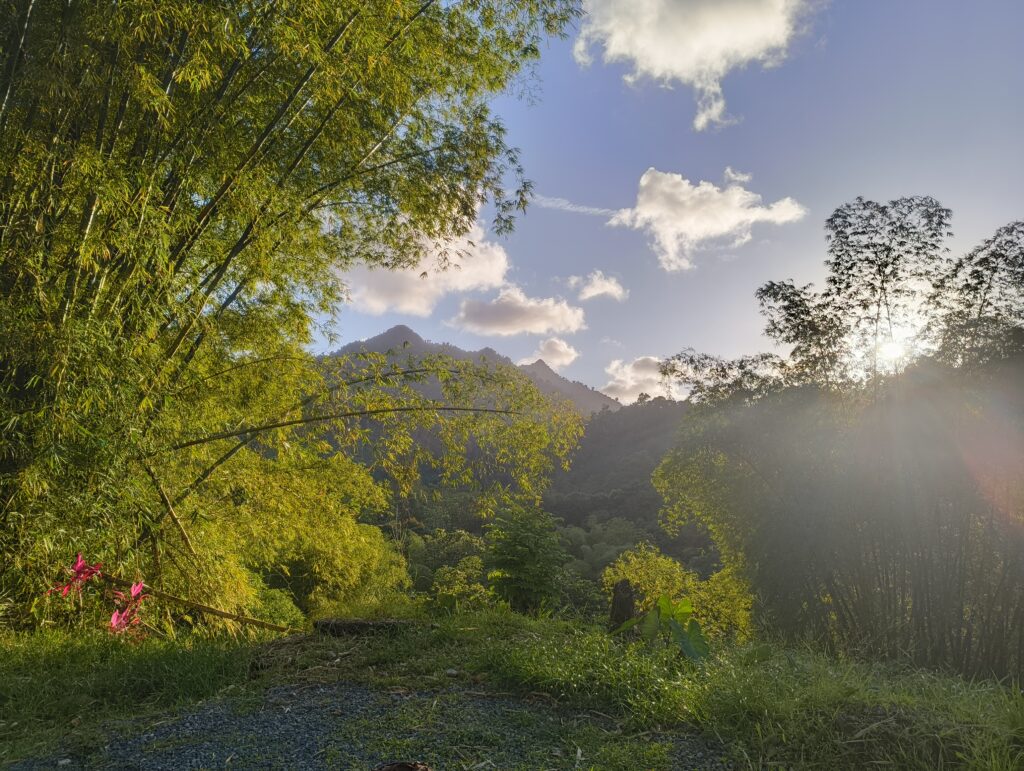
Later, as we are approaching Roseau, a mass of long reddish hair catches my eye. It is one of the girls, perched in the back of a brown pickup, on a family outing to an auto parts shop. These shops have everything, except the bit for your unusual car.
The trip to town has to be made to pick up supplies. Who supplies what and where they are, is a game of getting to know Dominica, and the results gleaned from one visit might not hold true the next time. In Astaphan’s one day, 6 bags of Co-op Honey and Raisin Granola appear on the shelves, but the tinned tomatoes have gone. Like the granola, my being here is still unexpected. At the checkout, I put our items on the conveyor, it doesn’t work, none of them work, nor does the escalator, but items are scanned and tap goes the payment.
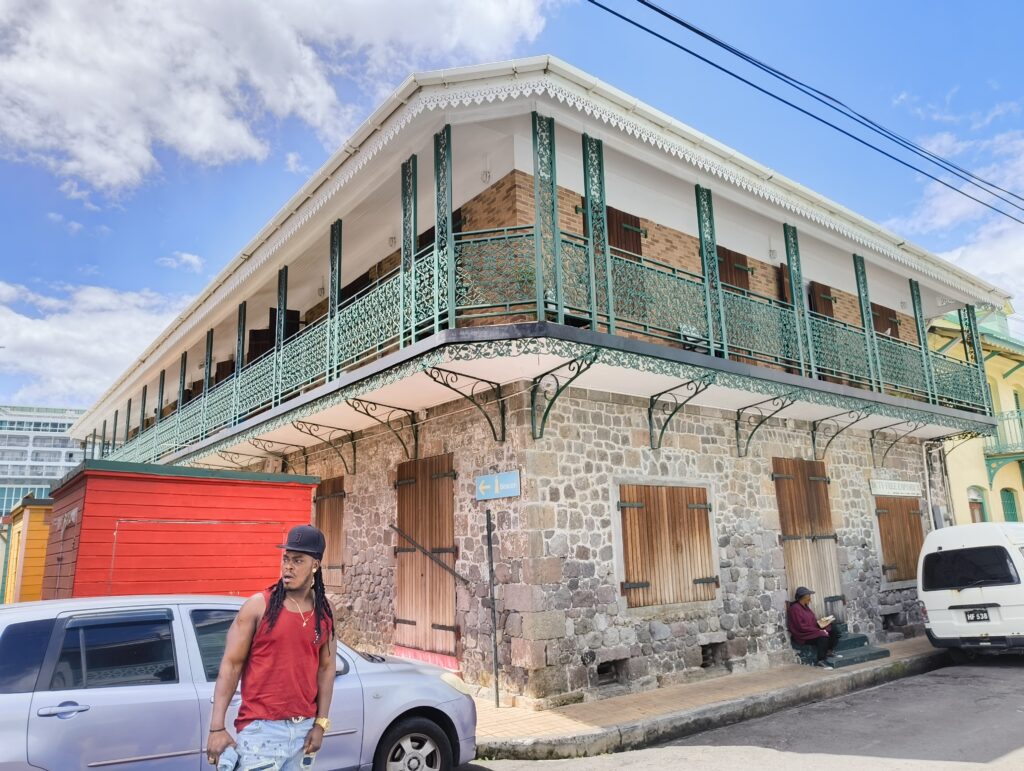
I look down to the harbour and see the horizontal tower block of a cruise ship. It is so massive that it seems as if Roseau is moored to it. Later, on the otherwise deserted verandah of the harbour side museum, we study the ranks of mostly empty balconies, and watch the stream of passengers flowing in and out from the jetty. The museum is itself an exhibit, with it’s delapidated displays, half completed signage and staff who seem imprisoned in a timeless, eventless void. The past drags it’s shabby feet.
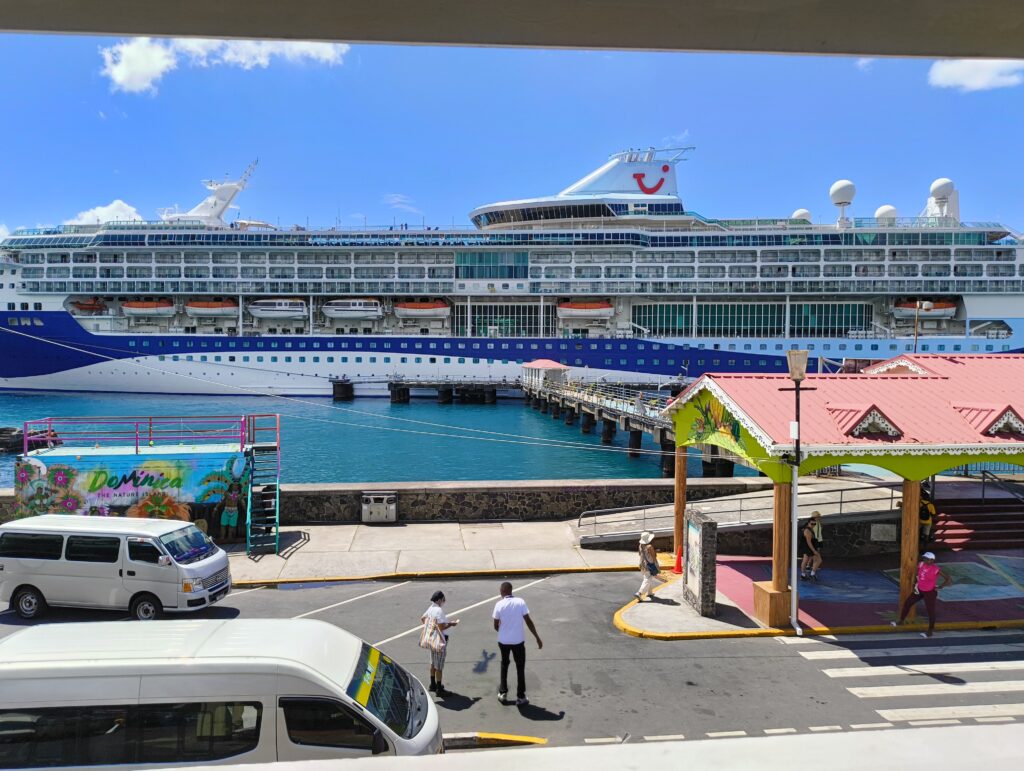
I get the feeling that people wash up here, brought by the tides of life, and some stay, the threads of their lives quickly weaving into the fabric of the island. Others are washed away, by a hurricane destroyed home or by inclement trade winds and lack of opportunity. The charms sung by the island are both inveigling and brutal, the songs capture some hearts but capsize others. How you like Dominica? We love it. You are welcome, it is your country too.
My understanding of landforms is wooly. Ravines, valleys, gorges, ditches, canyons, gullies, which is what, and where and when? Some stretches of road float above the surrounding forest, like an elevated overpass, but there is no kerb, or railing, just a void of unknown size. In town and along the coast around Roseau, the road is defined by a two foot deep concrete trench. Look ahead, keep the peril on the periphery. This is Island life.
We are lounging in a hot pool, a faint sulphurous smell occasionally drifts up. The water is orange. There is a hotter pool, but only my foot makes it in. The drive to Watten Waven, a village with many hot pools, is a carnival of road hazards. Landslides, road edge failure signs, precipitous drops one side, vertical rock faces the other, hairpin bends so steep and sharp that taking the wrong line will scrape the bottom of the car. How do people manage?
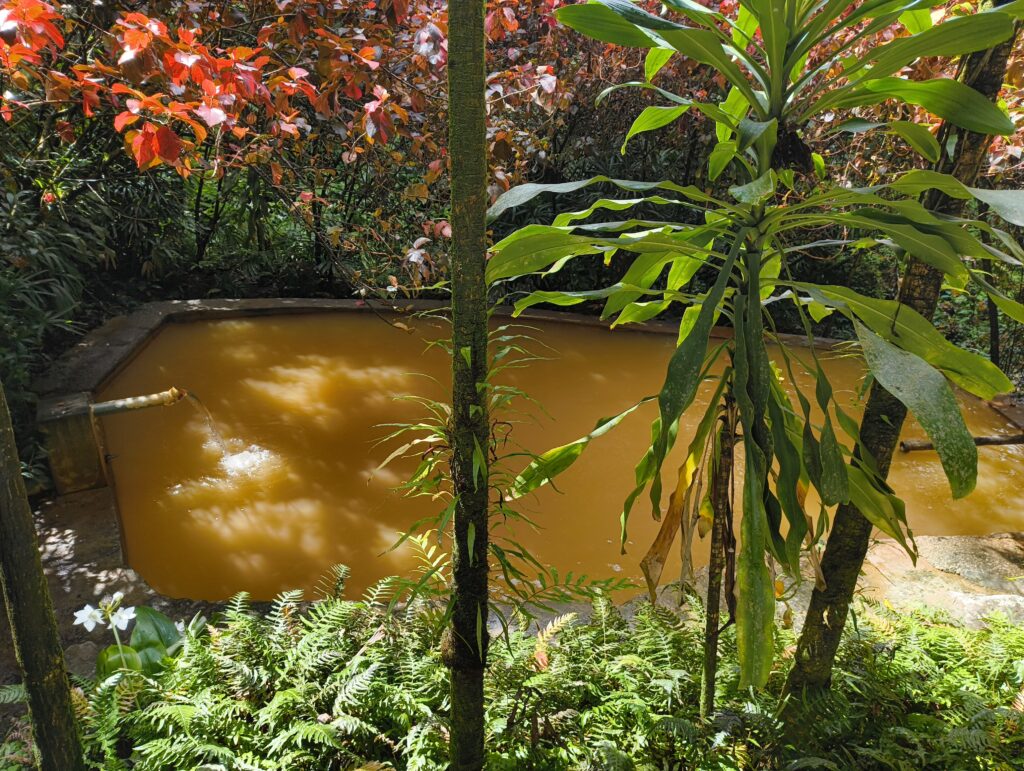
Up here, high up the Roseau valley, boiling water pours out of the ground. Boiling Lake is what it says it is. The Carribbean ring of fire, an arc of volcanic, plate crashing, island forming drama, here plays out in the everyday. We go to Champagne reef for an afternoon, Tash hires a snorkel and reports back on the clear blue coral jamboree of tropical fish and bubbles rising from the seabed.
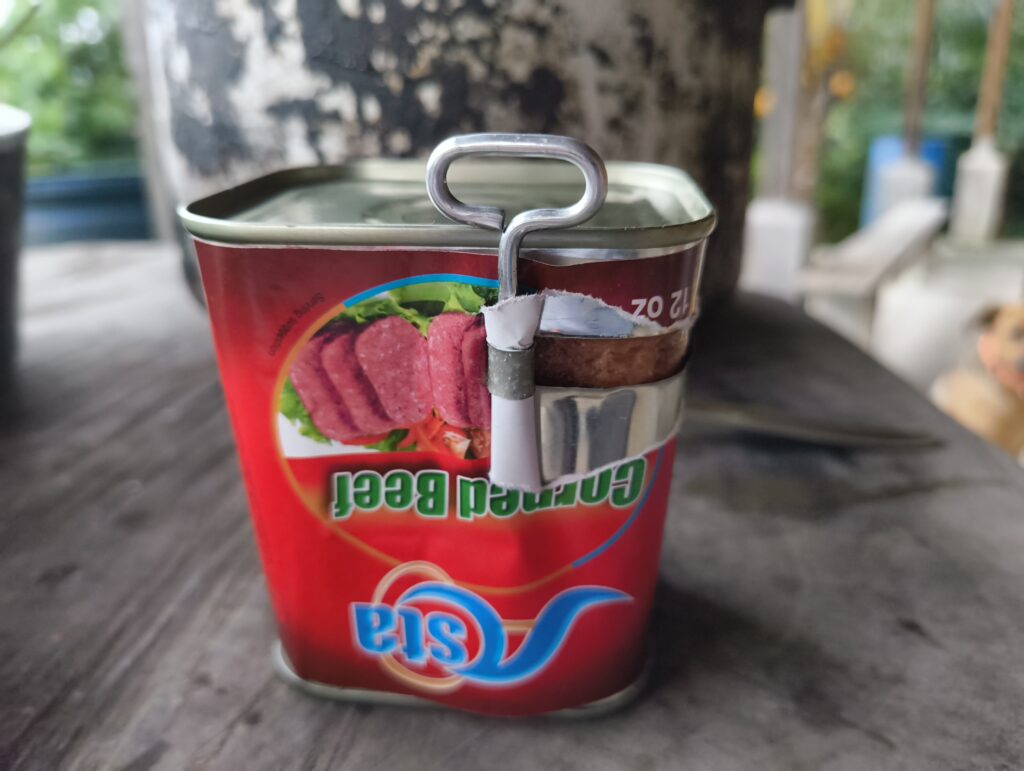
Returning home to Parrots Nest, our roost on a cliff edge, facing nothing but green clad mountains, is always a blessing. The garden still carries some of the giant fallen trees from Maria, but cucumbers, broccoli, basil, onions and much else thrives in the terracing of raised beds. Keith bounds up to the car whenever we return, tail wagging as if it were fully wound, keen to be loved. For a few weeks, Sebastian is away running an island tour, so we take on the feeding of Keith and Busta and Spotty. He hands us a sack of rice and a bag of tins. Sardines, mackerel, corned beef, chicken, spam. He loves his animals. Tash cooks for me, and I cook for them. Occasionally they look disappointed, and wander away from a half-finished bowl. In the morning the bowls are nearly empty.
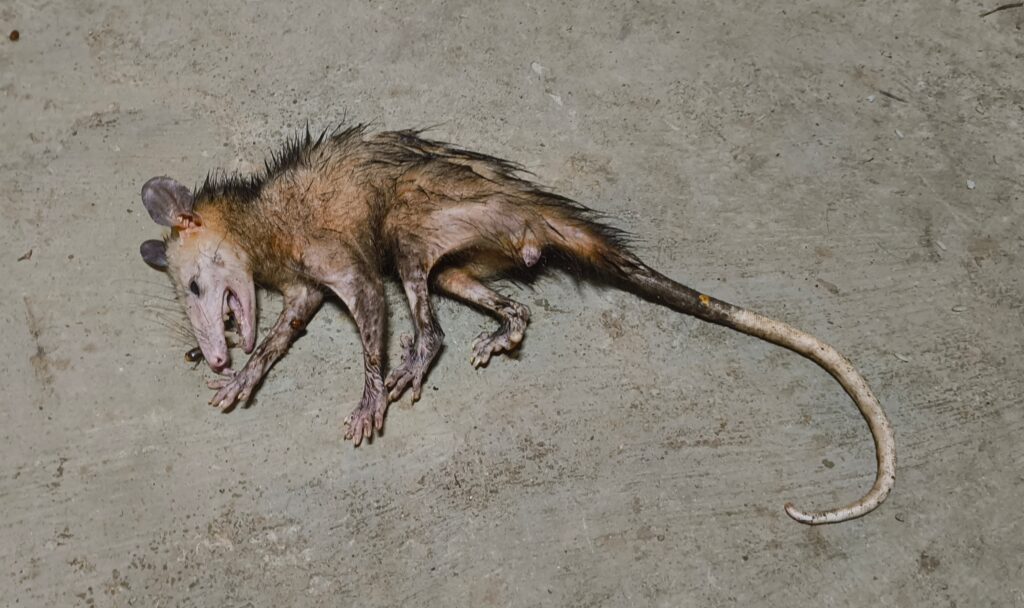
One evening I see a manicou, half Dobby half Golem, tucking in to Keith’s leftovers. It catches me approaching, staggers in slow motion, and then collapses. My mind runs through it’s catastrophic routines. How do I dispose of a dead Manicou, what implements can I use, is this bad vibes, an ill omen? With its lips drawn back, eyes wide open, laying on its side, it’s a grim sight. I shout to Tash, and as she comes out, something clicks in my mind. A manicou is an opossum, possums play dead! A little later, I watch as it rises from the grave, slowly slowly regaining the use of its limbs, and staggers away. Cars and trucks are oblivious to this predator fooling strategy and each morning their flattened forms punctuate the roads.
The build progresses and with it, my understanding of both the technicalities of building with concrete, as well as the skill of the team. My axis of construction has been redimensioned. Their’s are straight and true and plumb. Post Maria, wood has been superseded, and I need to get up to speed. I asked Eddo about Dragon windows. Before Maria, no-one really sure. After Maria, seeing their windows survive, everyone go there. And price go up, yes weh.
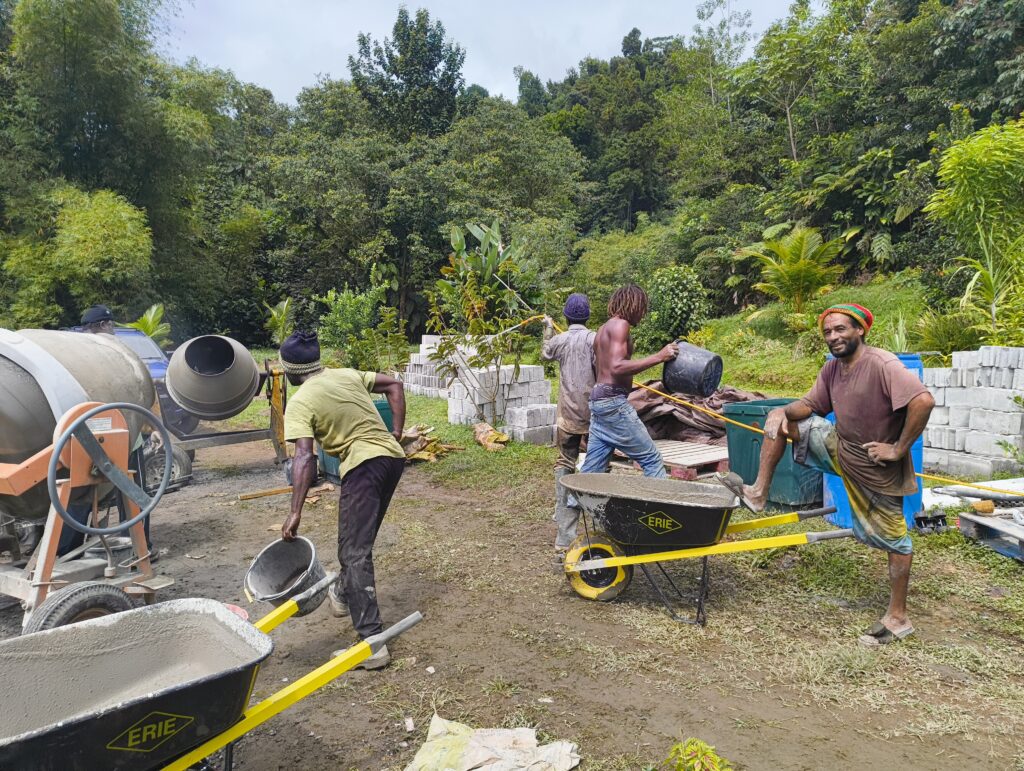
For a while we are sidetracked by the idea of pumped concrete. Speed! Efficiency! Two site meetings later, we are turned down. Too far, too steep, too risky on our shonky track. Probably too little to make it worthwhile. The team is expanded, concrete mixers are found and hauled to site and a slab is cast by early afternoon. Tash brings lunch and I bring beer. The incredible energy of people transforming space has set us back on course.
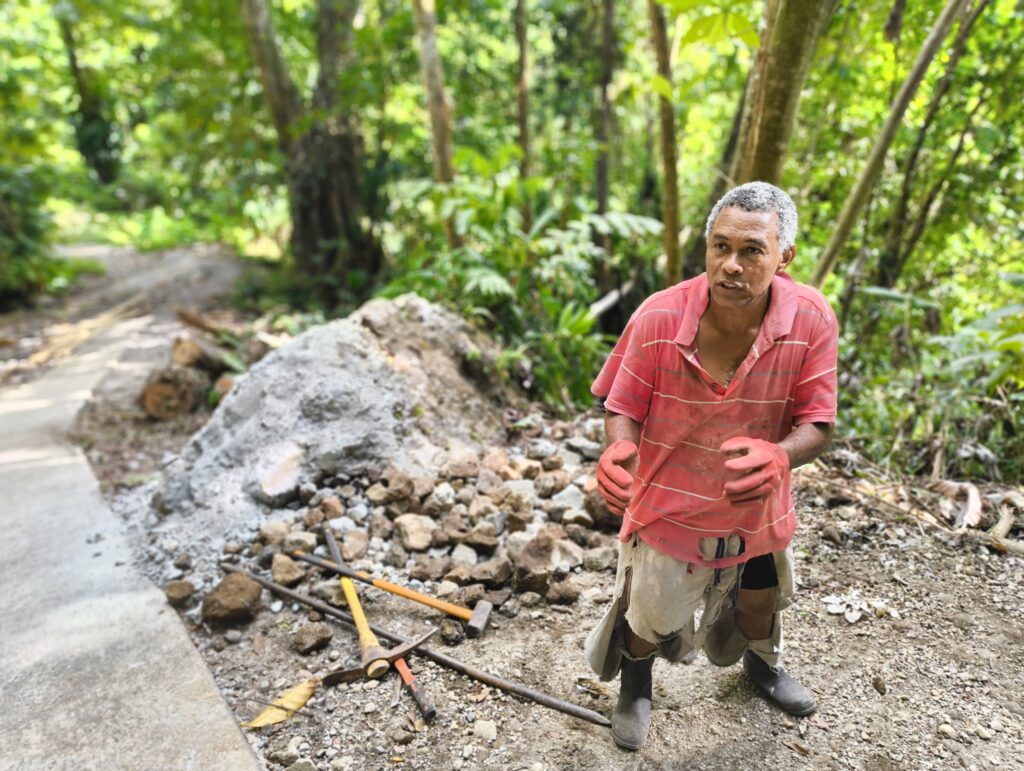
We go to Saltoun Falls, close to us, but rarely visited by the bus ferried cruise shippers. A wide concreted track leads some of the way down, where a man, with trousers so ragged that I can’t imagine how he gets into them, is hacking away at a giant boulder. Within minutes, Johanne is telling us about designing with Sketch-Up. If you are surveying, the X axis is always north. Yah, the lecturers at the college ring me up to ask how to do this or that. He describes the process of setting thirty foot telegraph poles into the ground for his new building. His eyes are bright, sparkling and full of life. This energy and vibrancy we meet, unexpectedly, at almost every turn. It is a brilliant and bright land.
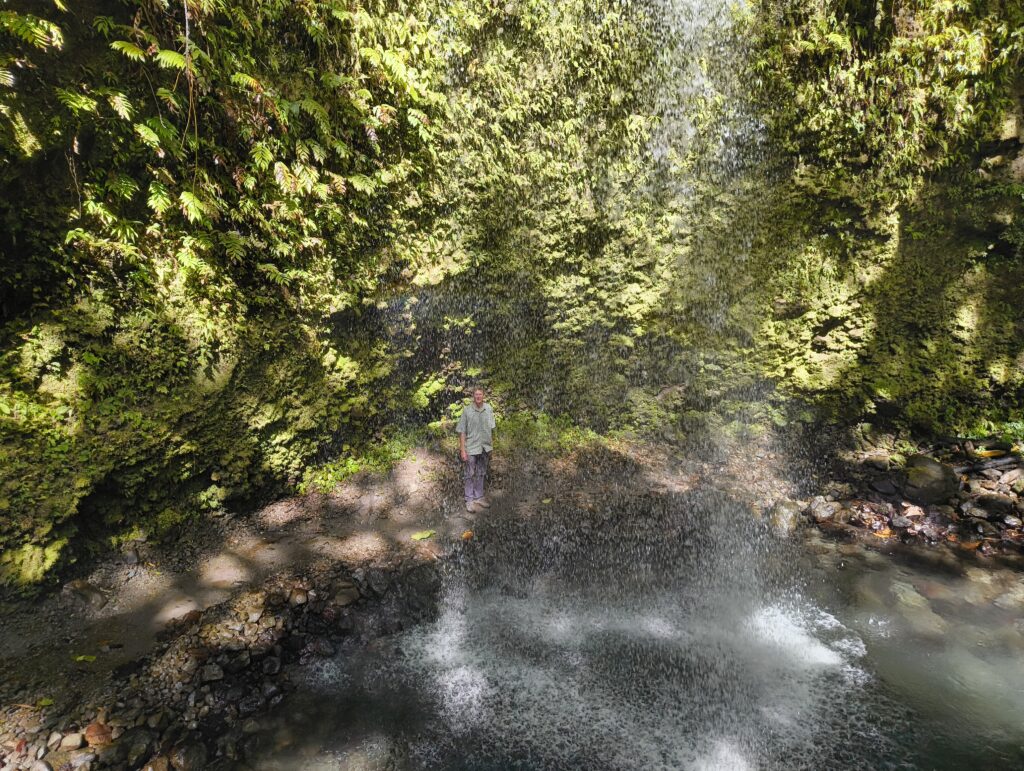
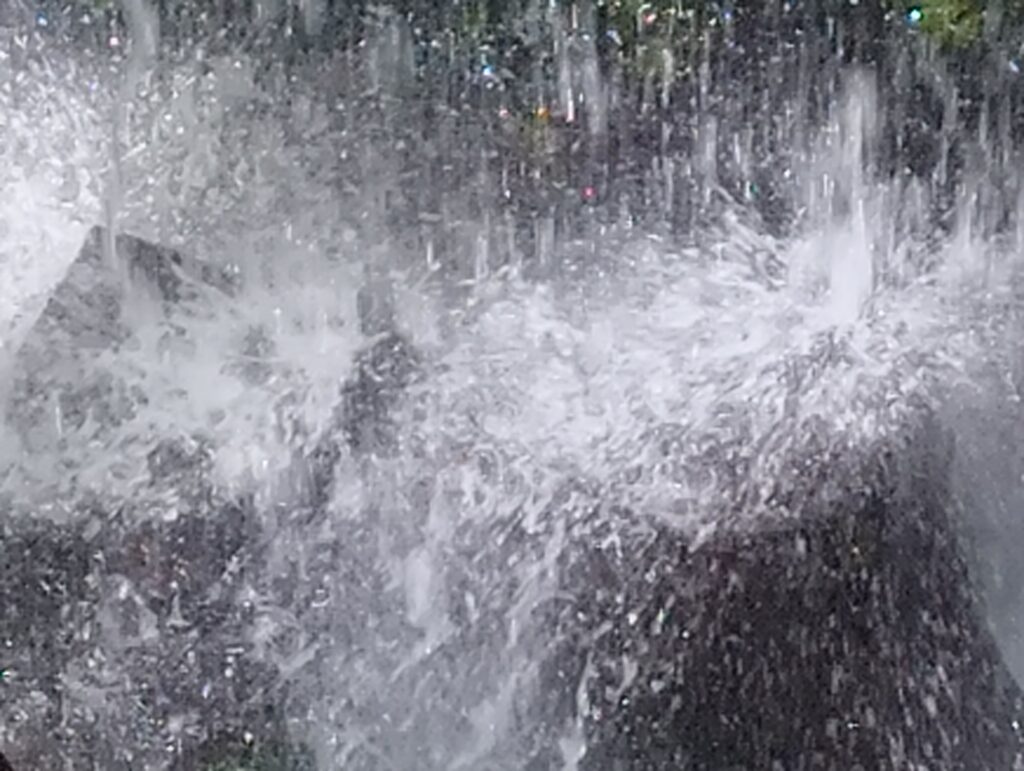
There are two falls, each with a wooden platform above the pools. Tash swims, I observe. The sound and spray, the fragmenting water as it slips over the lip eighty feet above, it is a damp, cool green world. The afternoon sun flickers through the giant trees, and light and shadows dance over the water.